
It’s natural to compare your financial progress to friends, family members, coworkers, or headlines in the news. You may wonder whether you’re saving enough for retirement, investing enough each month, or building wealth as quickly as others. While comparing financial benchmarks is common, it is rarely helpful. Every financial journey is shaped by different goals, incomes, responsibilities, and life experiences.
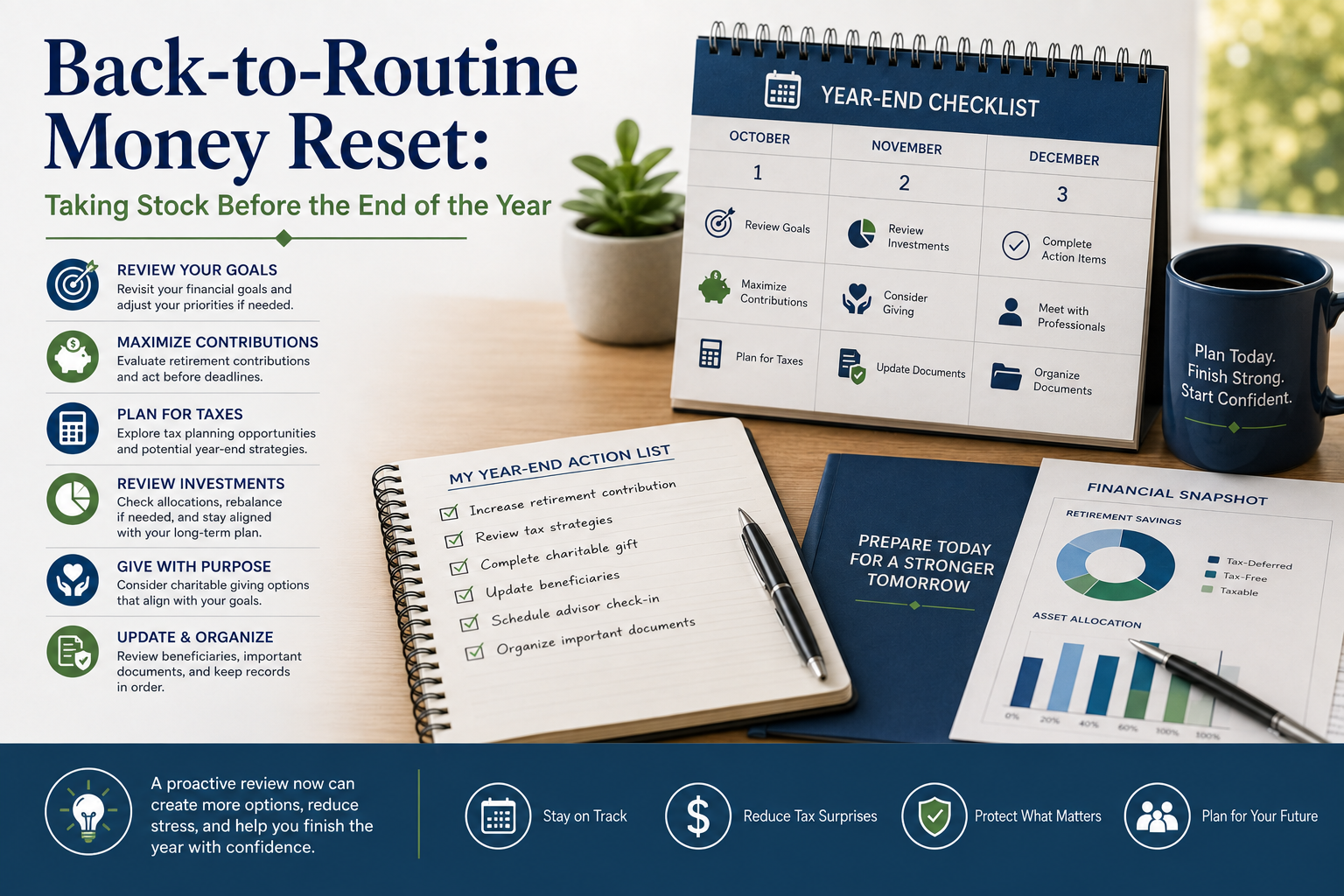
Instead of measuring success against someone else’s circumstances, consider using financial benchmarks that reflect your own objectives. Personal benchmarks can help you evaluate progress, identify areas for improvement, and make informed decisions as your financial situation evolves.
What Is a Financial Benchmark?
A financial benchmark is a point of reference used to evaluate progress toward a specific goal.
Unlike comparisons to friends or national averages, personal financial benchmarks are based on your individual circumstances.
Examples might include:
- Reaching a retirement savings goal
- Building an emergency fund1
- Reducing debt
- Increasing investment contributions
- Saving for a major purchase
Benchmarks provide a way to measure progress over time rather than focusing on day-to-day fluctuations.
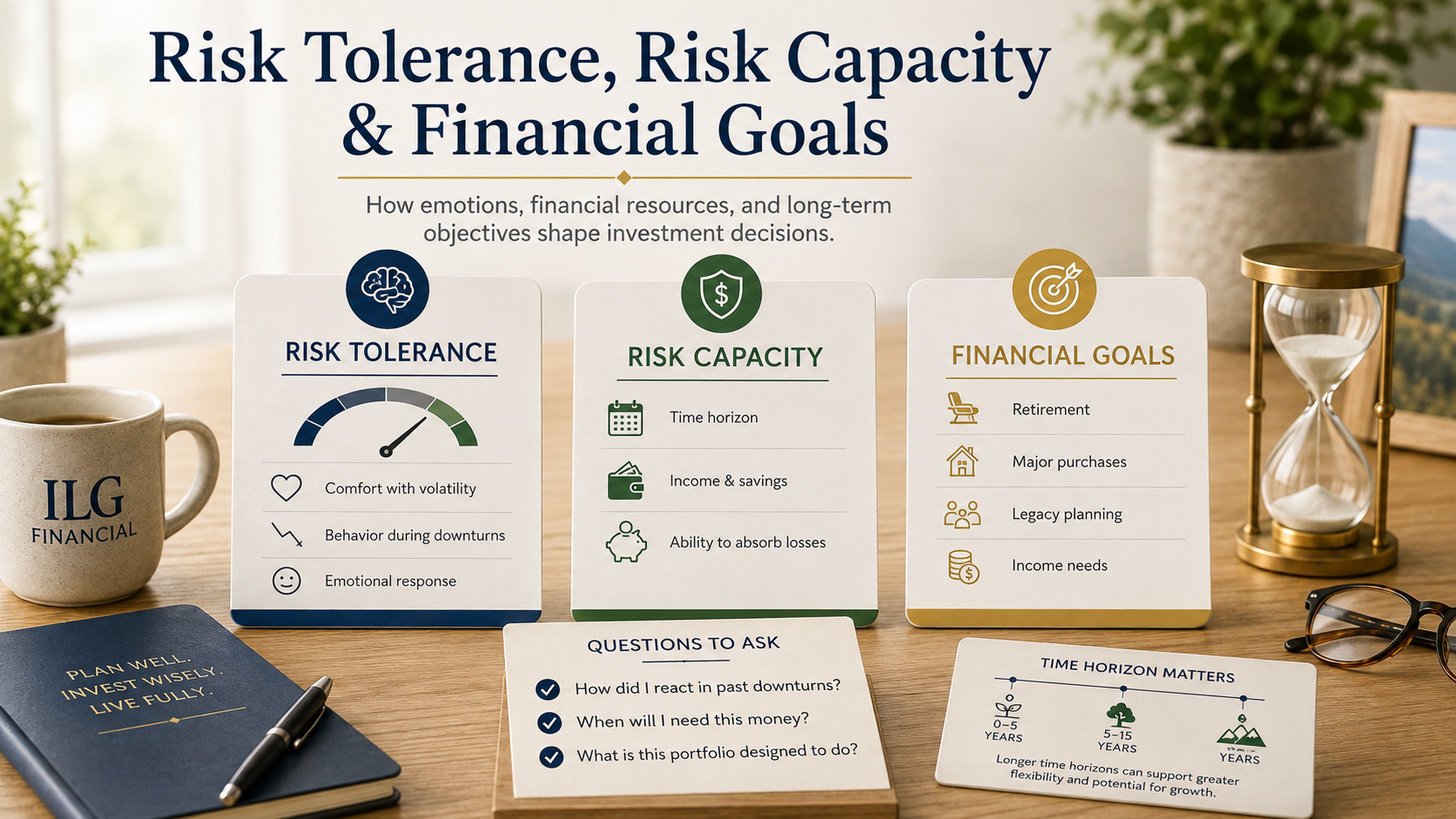
Start With Clearly Defined Goals
Before establishing benchmarks, it’s important to identify what you’re working toward.
Consider goals such as:
- Retiring by a certain age
- Purchasing a home
- Paying for education
- Building financial flexibility
- Leaving a legacy2 for loved ones
Clearly defined goals provide direction and help determine which benchmarks are most meaningful.
Focus on Progress Rather Than Perfection
Financial progress rarely follows a straight line.
Income changes, unexpected expenses arise, markets fluctuate, and personal priorities evolve. Rather than expecting perfect consistency, it can be more helpful to evaluate whether you’re moving in the right direction over time.
Small improvements often become meaningful when repeated consistently over many years.
Common Financial Benchmarks to Review
While every financial plan is unique, several benchmarks are commonly reviewed.
Savings Progress
Regularly review whether you’re contributing consistently toward:
- Retirement accounts
- Emergency savings
- Education savings
- Other long-term goals
Consistency is often more important than making dramatic changes all at once.
Debt Reduction
If reducing debt is one of your priorities, benchmarks may include:
- Paying down balances
- Reducing interest costs
- Improving cash flow
- Increasing available savings after debt payments
Tracking steady progress can help maintain motivation.
Emergency Savings
An emergency fund can provide flexibility when unexpected expenses occur.
Rather than comparing account balances to others, evaluate whether your emergency savings align with your household’s needs and monthly expenses.
Retirement Readiness
Retirement benchmarks often involve more than account balances alone.
Questions to consider include:
- Am I contributing consistently?
- Does my investment strategy still align with my goals?
- Have I reviewed my retirement income strategy?
- Am I periodically increasing contributions as my income grows?
Looking at retirement planning from multiple perspectives provides a more complete picture of progress.
Avoid Comparing Yourself to Others
It can be tempting to compare investment balances, salaries, or retirement savings with people around you.
However, these comparisons often overlook important differences, including:
- Career paths
- Family responsibilities
- Health circumstances
- Inheritance or financial assistance
- Lifestyle choices
- Individual financial goals
Comparisons based on incomplete information can create unnecessary pressure and distract from your own priorities.
Review Benchmarks Regularly
Financial benchmarks are most useful when reviewed consistently.
A quarterly or annual review can help you:
- Measure progress toward goals
- Update priorities
- Identify opportunities for improvement
- Adjust strategies when circumstances change
Regular reviews also help ensure your benchmarks continue to reflect your current financial situation.
Celebrate Meaningful Progress
Financial planning is often viewed only through the lens of future goals, but it’s equally important to recognize milestones along the way.
Whether you’ve increased retirement contributions, paid off debt, built an emergency fund, or reached another financial objective, acknowledging progress can reinforce positive financial habits.
Recognizing accomplishments may also provide motivation to continue working toward larger long-term goals.
Measuring What Matters Most
Financial benchmarks are most valuable when they reflect your personal goals rather than someone else’s achievements.
By establishing meaningful benchmarks, reviewing progress regularly, and making adjustments as life changes, you can create a clearer picture of your financial journey.
Success is rarely defined by a single number. Instead, it comes from making thoughtful decisions that support your priorities and keeping your financial plan aligned with the life you want to build.
Sources:
- [1] https://www.investopedia.com/terms/e/emergency_fund.asp
- [2] https://www.investopedia.com/terms/l/legacy-planning.asp