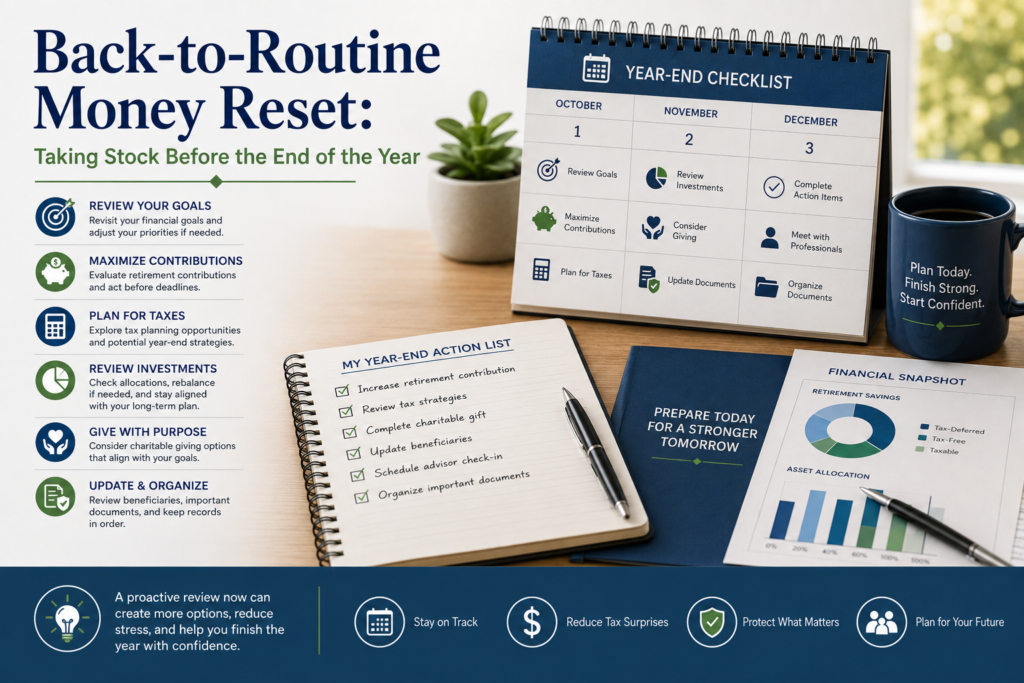
As the final months of the year approach, many financial deadlines begin to come into focus. Retirement contributions, charitable gifts, tax planning opportunities, and account reviews often become priorities as individuals and families prepare for year-end.
While it can be tempting to wait until December, addressing these items early may provide additional flexibility and reduce the stress that often accompanies last-minute financial decisions. A proactive review can also help identify opportunities that may be overlooked when time is limited.
Preparing for year-end does not necessarily require major changes. Instead, it involves evaluating key areas of your financial life and determining whether adjustments may be appropriate before the calendar turns.
Review Your Financial Goals
Year-end planning begins with revisiting the goals you established earlier in the year.
Consider questions such as:
- Have I made progress toward my primary financial objectives?
- Have any priorities changed during the year?
- Are there actions I still want to take before year-end?
This review can provide context for other financial decisions and help ensure that upcoming actions align with your broader objectives.
Evaluate Retirement Contributions
For many individuals, retirement accounts represent an important component of year-end planning.
Review contributions to:
- Employer-sponsored retirement plans
- Traditional IRAs
- Roth IRAs
- SEP IRAs or SIMPLE IRAs, if applicable
If contribution limits have not been fully utilized, there may still be time to increase contributions before applicable deadlines. Reviewing contribution levels early allows for gradual adjustments rather than rushed decisions late in the year.
Assess Tax Planning Opportunities
The final months of the year often provide opportunities to review tax-related strategies.
Areas worth evaluating may include:
- Estimated tax payments
- Capital gains and losses
- Charitable contributions
- Retirement account contributions
- Business-related deductions, if applicable
Because tax situations vary significantly, it may be beneficial to discuss potential strategies with a qualified tax professional before taking action.
Review Investment Accounts
Year-end can also be an appropriate time to review investment portfolios and account allocations.
Questions to consider include:
- Does my current asset allocation still align with my goals?
- Has market performance shifted allocations significantly?
- Are there opportunities to rebalance the portfolio?
Regular reviews help ensure that investment decisions remain connected to long-term objectives rather than short-term market movements.
Consider Charitable Giving Plans
Many individuals choose to support charitable organizations during the final months of the year.
If charitable giving is part of your financial plan, reviewing those intentions early may provide additional time to evaluate options and gather documentation.
Depending on individual circumstances, strategies may include:
- Cash donations
- Gifts of appreciated securities
- Qualified charitable distributions (QCDs)1 for eligible individuals
- Donor-advised funds
Each approach carries different considerations and may warrant professional guidance.
Update Beneficiaries and Estate Documents
Beneficiary designations and estate planning documents are often overlooked during routine financial reviews.
Take time to review:
- Retirement account beneficiaries
- Life insurance beneficiaries
- Wills
- Trusts
- Healthcare directives
- Powers of attorney
Life changes such as marriage, divorce, births, deaths, or other family developments may create a need for updates.
Review Required Minimum Distribution Obligations
Individuals subject to required minimum distributions (RMDs)2 should confirm whether distribution requirements have been satisfied for the year.
Waiting until the final weeks of the year can increase the likelihood of administrative delays or missed deadlines. Addressing RMD obligations early may provide additional flexibility and time for planning.
Organize Important Documents
As year-end approaches, document organization becomes increasingly valuable.
Consider gathering:
- Tax documents
- Investment statements
- Insurance records
- Estate planning documents
- Charitable contribution records
Having these materials readily available can simplify tax preparation and future financial reviews.
Create a Year-End Action List
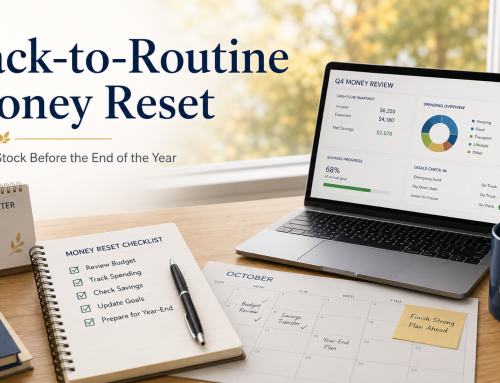
One helpful strategy is creating a checklist of financial items you would like to address before December 31.
Examples may include:
- Increasing retirement contributions
- Completing charitable gifts
- Updating beneficiaries
- Scheduling meetings with financial or tax professionals
- Reviewing insurance coverage
Breaking larger objectives into smaller action steps can make the process more manageable.
Looking Ahead to Year-End
Year-end planning is often most effective when it begins before year-end arrives.
By reviewing financial goals, evaluating retirement contributions, assessing tax strategies, and organizing important documents, you can approach the final months of the year with greater clarity and preparation.
A proactive approach may provide additional flexibility and help ensure that important financial decisions receive the attention they deserve before key deadlines pass.
Sources:
- [1] https://www.investopedia.com/qualified-charitable-distribution-qcd-5409491
- [2] https://www.investopedia.com/terms/r/requiredminimumdistribution.asp