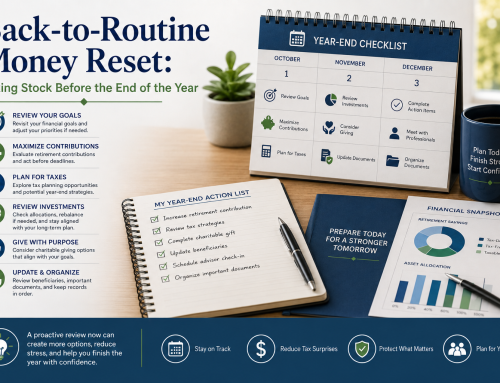
As the calendar year comes to a close, many people begin preparing for the holidays and looking ahead to the coming year. Before turning the page on the calendar, however, it can be worthwhile to review your financial plan and determine whether there are any remaining tasks that deserve attention.
Year-end planning is about more than checking boxes. It provides an opportunity to evaluate your progress, revisit financial goals, and organize important decisions before key deadlines arrive. Taking a proactive approach may also provide additional time to coordinate with financial, tax, or legal professionals if questions arise.
Whether you’ve experienced major life changes this year or simply want to stay organized, this year-end financial checklist can help you begin the new year with a clearer understanding of your financial picture.
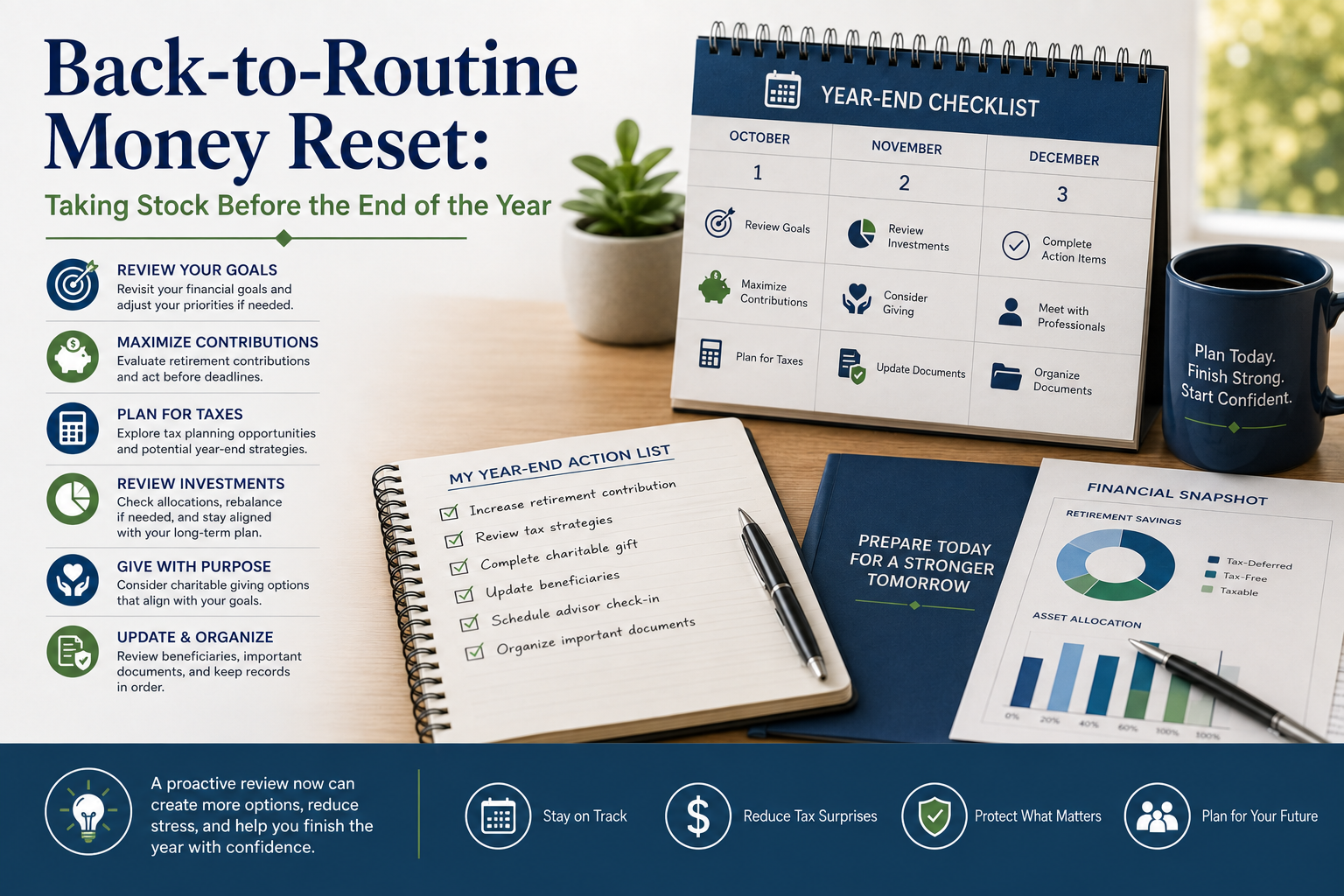
Review Your Financial Goals
Start by looking back at the goals you established earlier in the year.
Ask yourself:
- Have my priorities changed?
- Did I make progress toward my savings goals?
- Are there financial objectives I still want to address before year-end?
- Do my goals for next year look different than they did twelve months ago?
Even if your goals remain the same, this review provides valuable context for the decisions that follow.
Evaluate Retirement Savings
Year-end is a good time to review retirement contributions and determine whether adjustments are appropriate.
Consider reviewing:
- Employer-sponsored retirement plan contributions
- Traditional IRA contributions
- Roth IRA contributions
- SEP IRA or SIMPLE IRA contributions, if applicable
If your budget allows, increasing contributions before applicable deadlines may help you make additional progress toward your long-term retirement objectives.
Review Investment Accounts
Investment portfolios naturally change throughout the year as markets fluctuate.
A year-end review provides an opportunity to consider:
- Whether your asset allocation still aligns with your goals
- If portfolio rebalancing should be discussed
- Whether investment holdings continue to reflect your long-term strategy
- Capital gains or losses that may affect tax planning
Rather than reacting to short-term market movements, use this review to evaluate your portfolio within the context of your overall financial plan.
Confirm Required Minimum Distributions
If you are subject to required minimum distributions (RMDs)1, confirm that distribution requirements have been addressed before applicable deadlines.
Waiting until late December may leave less time to resolve administrative issues or processing delays.
Reviewing RMD obligations early may also provide an opportunity to coordinate distributions with other year-end planning decisions.
Evaluate Charitable Giving Plans
For many families, charitable giving is an important part of year-end planning.
If charitable donations are part of your financial strategy, consider reviewing options such as:
- Cash contributions
- Gifts of appreciated securities
- Donor-advised funds2
- Qualified charitable distributions (QCDs), when eligible
Planning gifts before the end of the year provides time to gather documentation and evaluate which approach aligns with your goals.
Review Beneficiary Designations
Beneficiary designations often receive less attention than other financial documents, yet they play an important role in many financial plans.
Take time to review the beneficiaries listed on:
- Retirement accounts
- Life insurance policies
- Health savings accounts, when applicable
Major life events such as marriage, divorce, births, or deaths may warrant updates.
Organize Important Documents
Preparing for tax season becomes much easier when financial records are organized before January.
Gather documents such as:
- Investment statements
- Charitable donation receipts
- Retirement account statements
- Insurance policies
- Tax records
- Estate planning documents
Keeping these materials organized can simplify future financial reviews and tax preparation.
Schedule Professional Reviews
Year-end can be an excellent time to schedule conversations with professionals who play a role in your financial life.
These discussions may include:
- Financial planning reviews
- Tax planning meetings
- Estate planning updates
- Insurance policy reviews
Meeting before deadlines arrive often provides greater flexibility than waiting until the final weeks of the year.
Prepare for the Year Ahead
As you complete your year-end checklist, begin thinking about the financial goals you would like to pursue next year.
You might consider:
- Increasing retirement savings
- Building emergency reserves
- Reducing debt
- Updating your estate plan
- Creating new savings goals
Looking ahead allows your financial plan to remain focused on both current priorities and future opportunities.
Starting the New Year with a Strong Foundation
A year-end financial checklist is not about accomplishing everything before December 31. Instead, it is an opportunity to review your progress, organize important financial information, and identify planning opportunities before the new year begins.
By evaluating retirement savings, investment accounts, tax-related considerations, beneficiary designations, and future goals, you can approach the coming year with greater organization and a clearer understanding of where you stand financially.
Sources:
- [1] https://www.investopedia.com/terms/d/donoradvisedfund.asp
- [2] https://www.investopedia.com/terms/d/donoradvisedfund.asp